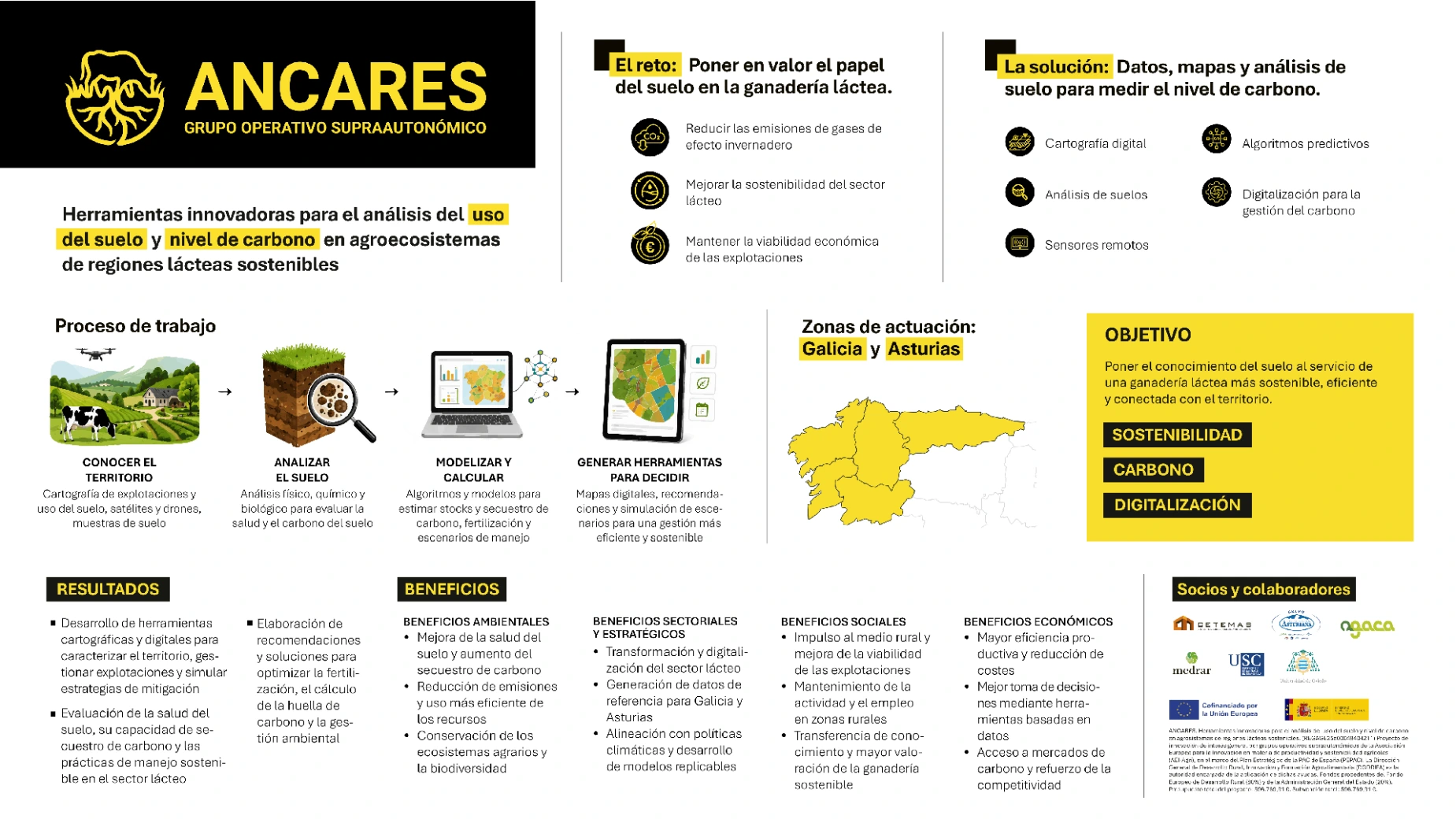
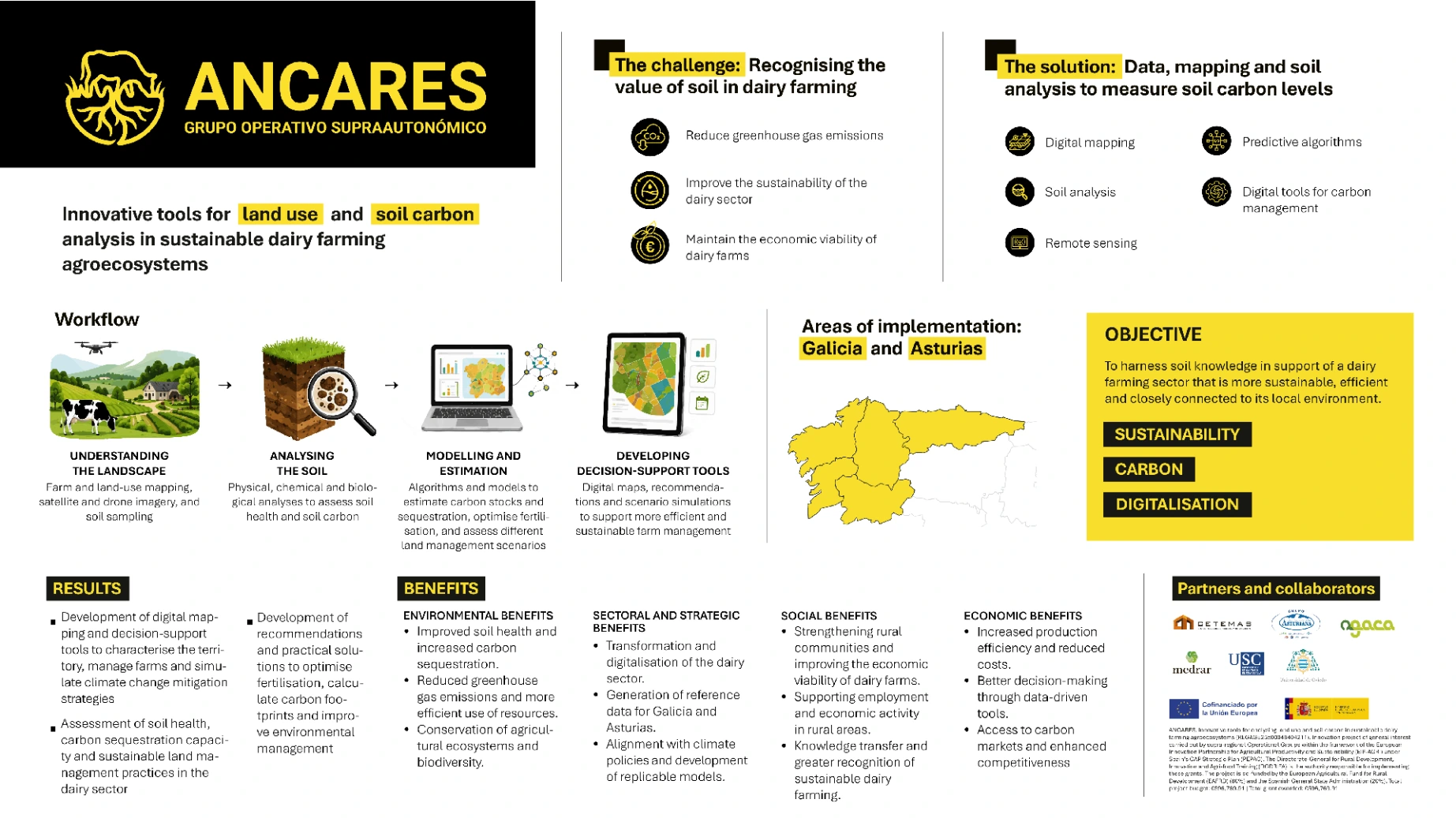
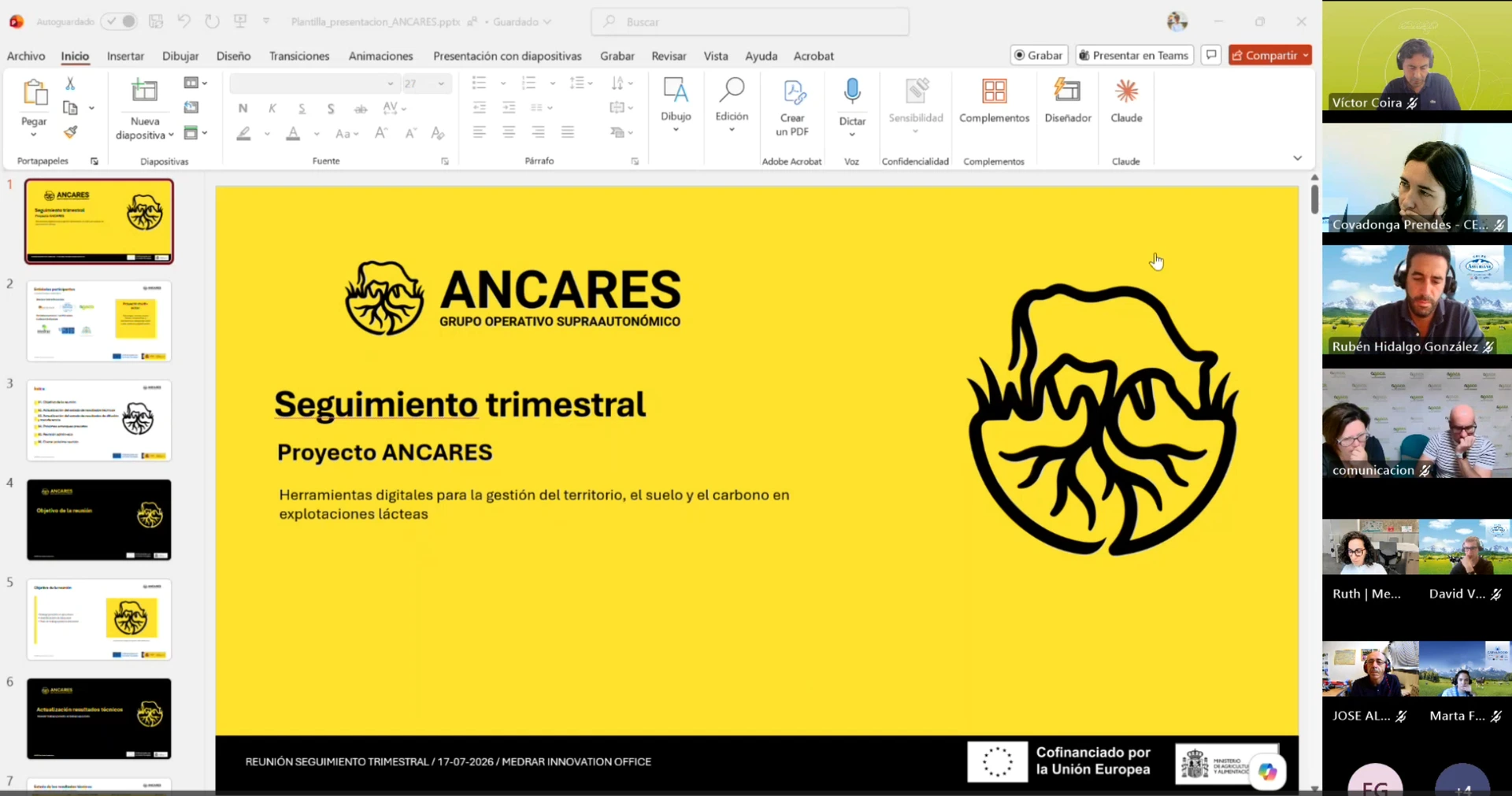
The ANCARES Operational Group consortium held its quarterly follow-up meeting on 17 July 2026 to review technical and dissemination progress and coordinate the planned actions for the coming months.
The ANCARES Operational Group continues to advance in building the cartographic and methodological foundations needed to develop its fieldwork on dairy farms in Galicia and Asturias.
During the quarterly follow-up meeting, the participating entities reviewed the status of the various activities, analysed the issues currently conditioning some actions and coordinated the next phases of the project.
Advances in territorial information
In Asturias, the process of organising and refining the cartographic information for approximately 80,000 plots continues. The existence of plots with multiple crops or declarants makes it necessary to adapt the structure of the tables and search criteria.
CETEMAS works together with Geomático in preparing a definitive structure that can subsequently be used to also incorporate the information from Galicia.
In the Galician community, the collection of authorisations from farmers needed to request from the Xunta the territorial information linked to their farms has already begun. The project will mainly work with CAP data, which will be supplemented, where possible, with information from the Land Registry, the Agricultural Farm Register and productive data from the farms.
Farm selection and fieldwork
In Asturias, six representative farms have been selected, distributed across three livestock zones and chosen taking into account territorial diversity and different land uses. This process will be completed shortly in Galicia.
The selected farms will be subject to drone flights, penetrometer measurements and soil sampling. Before starting these activities, the technical teams from CETEMAS and the University of Santiago de Compostela will coordinate a common protocol to ensure homogeneous sampling.
The joint start of work will depend on the availability of the equipment needed for sample extraction, whose preparation is scheduled for autumn. In the event of a delay, it will be considered to start the flights and measurements that can already be carried out beforehand.
Farm typologies and pilot plots
ANCARES trabajará también en la definición de diferentes tipologías o “ideotipos” de explotación láctea que reflejen la diversidad existente en Galicia y Asturias.
For their characterisation, aspects such as agricultural, livestock and forestry land uses, the managed area, the size and production of the farms, grazing and the presence of landscape elements such as hedgerows or associated forest land will be taken into account.
The first technical proposal will subsequently be verified and validated through focus groups with farmers.
The consortium also reviewed the launch of two demonstrative pilot plots. In them, different crop rotations will be compared —maize and ryegrass versus maize and legumes— and conventional fertilisation versus the use of digestate. The trials will include field monitoring, analysis and, where appropriate, flights before and after applying the selected practices.
Communication and digital tools
The results generated by ANCARES will be progressively integrated into a digital environment aimed at farmers. During 2026, the basic infrastructure of the portal is being developed, while the incorporation of the project-specific data and tools will be addressed in later phases.
In the field of dissemination, the project website is already published and work continues on preparing materials such as posters, roll-ups, an infographic and the first ANCARES audiovisual.
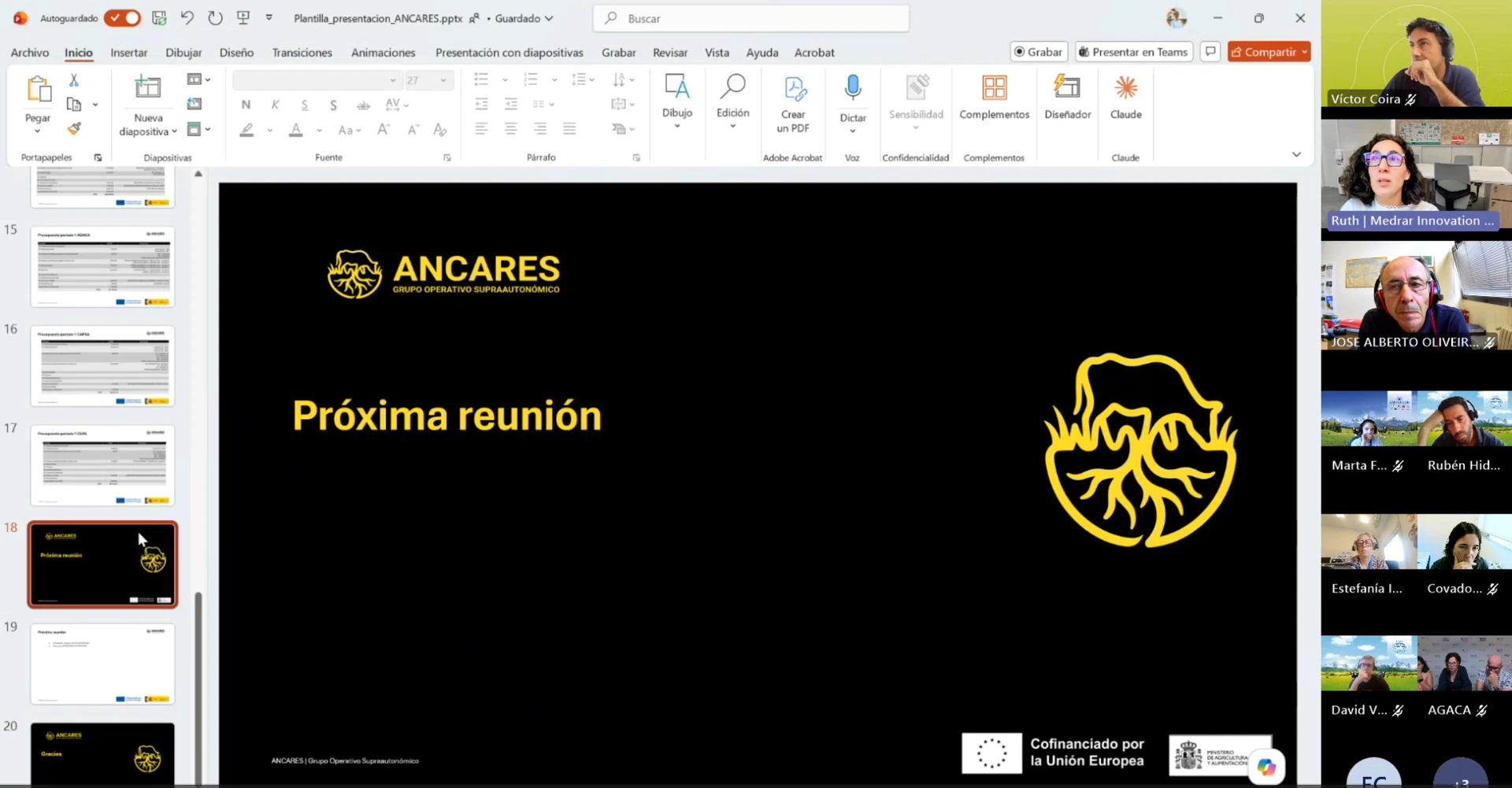
During the coming months, the project will focus on completing the selection and characterisation of the farms, having the necessary equipment for sampling, preparing the focus groups and launching the first pilot plots.
The consortium is made up of the Galician Association of Agri-food Cooperatives (Agaca), Capsa Food, Asturian Dairy Central, the University of Santiago de Compostela (USC), the University of Oviedo (UniOvi), Cetemas and Medrar Innovation Office.
ANCARES: Innovative tools for the analysis of land use and carbon levels in agroecosystems of sustainable dairy regions (REGAGE25e00048404211). General interest innovation project developed by supra-regional operational groups of the European Innovation Partnership for Agricultural Productivity and Sustainability (EIP-Agri), within the framework of the Spanish CAP Strategic Plan (PEPAC). The Directorate General for Rural Development, Innovation and Agri-food Training (DGDRIFA) is the authority responsible for the implementation of these grants. Funds from the European Agricultural Fund for Rural Development (80%) and from the General State Administration (20%). Total project budget: €596,769.91. Total grant: €596,769.91.